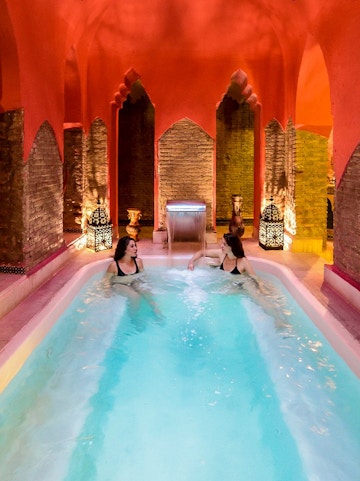
Go early in the day or in the final stretch of a late-afternoon visit. The mosque area is outdoors and lightly shaded, so midday heat drains your attention fast. If you arrive at noon, you’ll scan it instead of reading it.
Quick overview
- Access: Included in all Alhambra tickets
- Separate ticket: Not required
- When you'll see it: Midway through the open monumental route, in the Medina/Calle Real area
- Visit duration: 10–15 mins self-guided/15–20 mins with guide
- Best time: Early morning or late afternoon on a weekday, when the exposed Medina area is cooler and easier to read
- Restrictions: Standard Alhambra rules apply: no flash, no tripods or drones, and no entry beyond protected remains

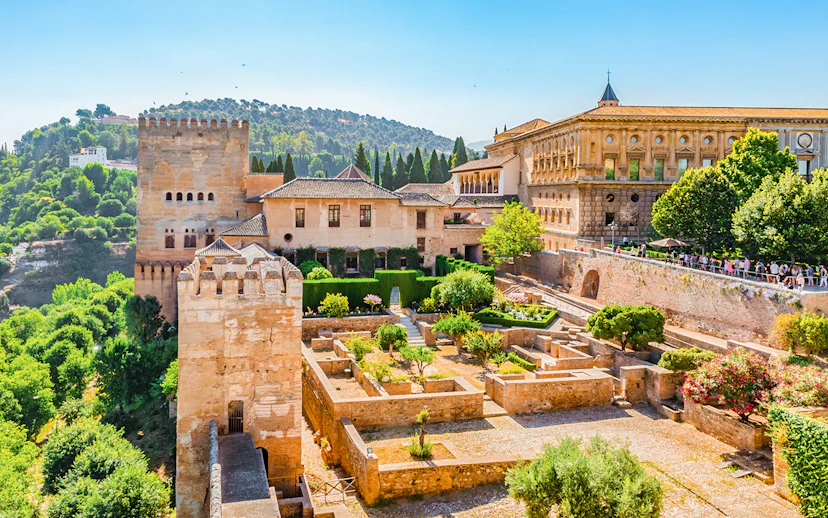
The Alhambra Mosque is included with all Alhambra tickets. No separate ticket is needed. You’ll find the former mosque area in the Medina/Calle Real section of the complex, usually visited midway through the open monument route rather than as a stand-alone stop. Choose a guided tour or at least an audio guide if this matters to you, because the site survives mostly as archaeological traces, a bath, and later Christian layers.
How to best experience the Alhambra Mosque
Best time to visit
How long to spend
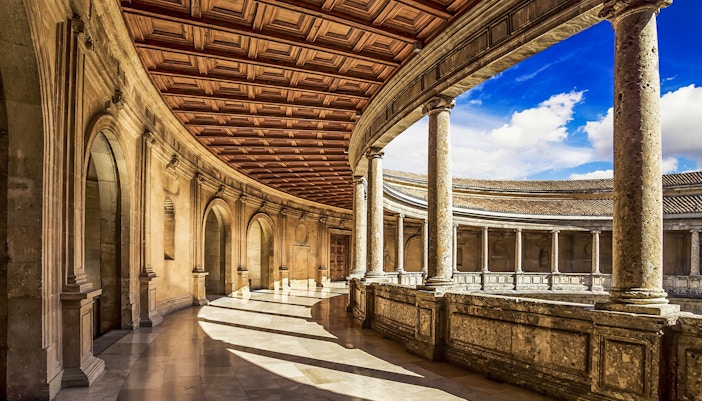
Allow 10–15 minutes self-guided or 15–20 minutes with commentary. That’s enough to locate the former mosque footprint, note the surviving bath, and understand the later church replacement. If you rush through, it feels like a passageway.

Where it fits in your itinerary
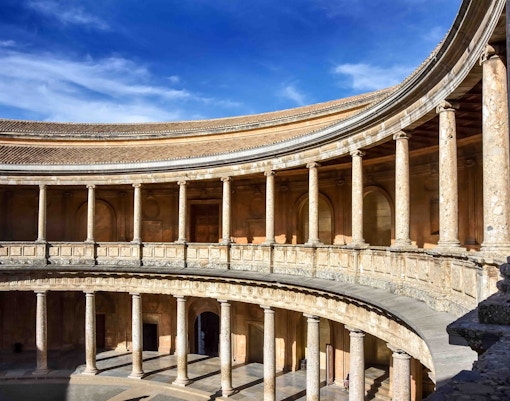
Treat it as a Medina stop, not a palace stop. Most visitors fold it between the Palace of Charles V, Calle Real, and the onward walk through the monumental area. Save a little mental energy for it.

Crowd patterns
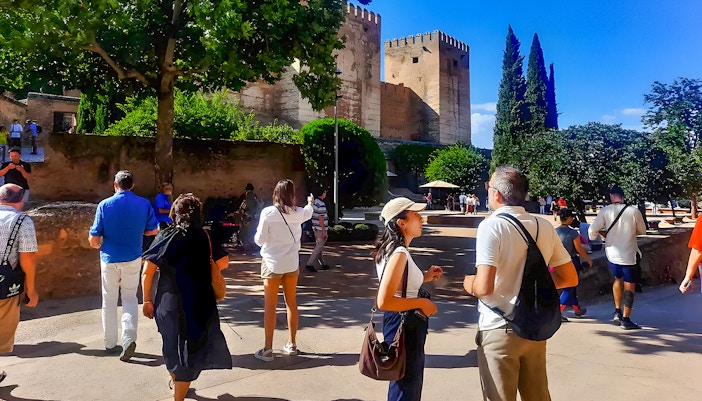
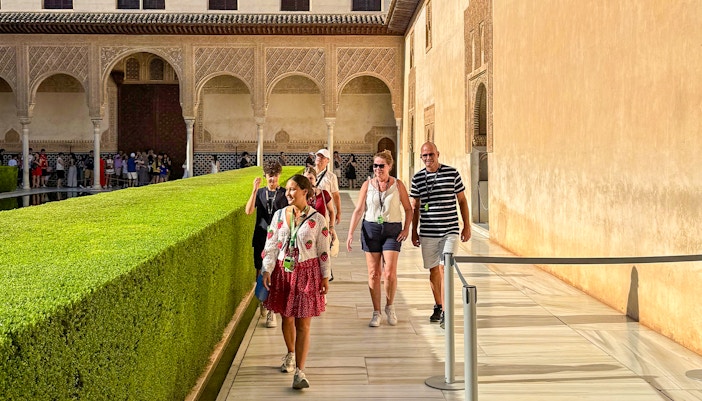
It rarely reaches Nasrid Palace density, but guided groups pass through late morning and early afternoon. At that pace, the site becomes background. Quieter shoulders of the day make it easier to stop, orient yourself, and compare layers.

What to prioritize if time is short
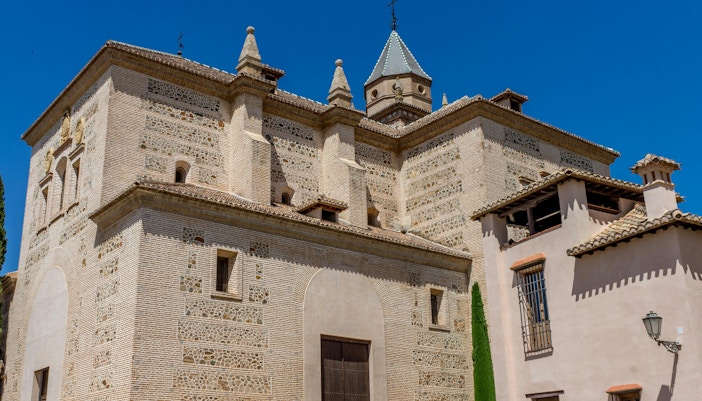
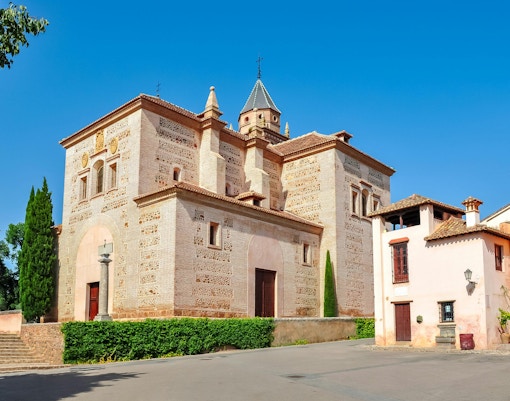
First identify the Bath of the Mosque, then look at the surrounding Medina streets and the later Church of Santa María de la Alhambra. Those three elements explain the whole story. Skip longer pauses elsewhere if needed.

Common mistakes to avoid
The biggest mistake is expecting a standing prayer hall. What survives is archaeological and easy to miss unless you know that beforehand. The second mistake is walking through without pausing long enough to understand the site.
Best tickets to experience the Alhambra Mosque
| Ticket type | Why choose it |
|---|---|
Alhambra Skip-the-Line Tickets with Audio Guide | Best if you want flexible pacing and enough context to spot the former mosque site without joining a group. |
Alhambra Skip-the-Line Guided Tour with Nasrid Palaces | Best if you want the mosque area explained within the Alhambra’s wider religious, urban, and palace story. |
Alhambra Premium Skip-the-Line Guided Tour with Nasrid Palaces | Best if the mosque bath and quieter Medina details matter to you; smaller groups make short interpretive stops easier. |
Why it’s worth seeing
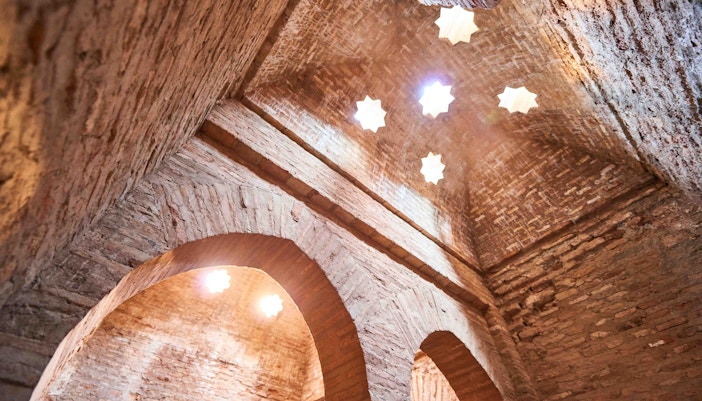
The mosque area matters because it proves the Alhambra was once a functioning royal city, not only a sequence of palaces for display. Most visitors walk past it without realizing that the original congregational mosque no longer stands and survives mainly through its footprint, associated bath, and the building that replaced it. These are the details worth slowing down for when you reach the Medina.

The Bath of the Mosque
Near the former mosque site, this bath is one of the clearest surviving traces of the complex’s religious life. Look for it around the Calle Real and church area. It makes the vanished mosque easier to read.

Church of Santa María de la Alhambra
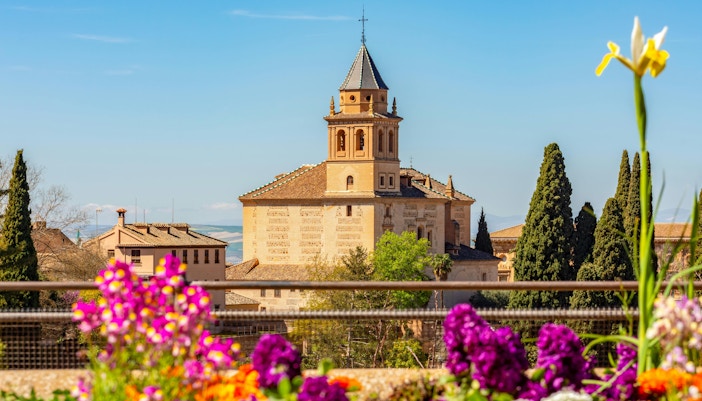
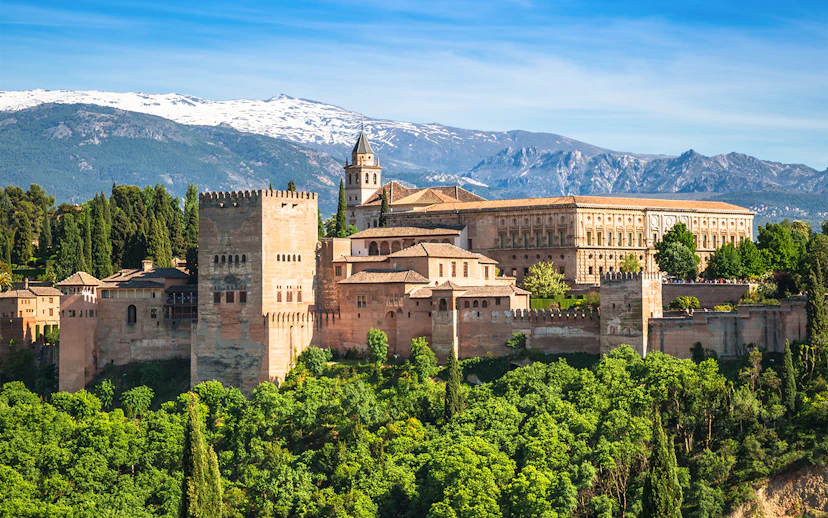
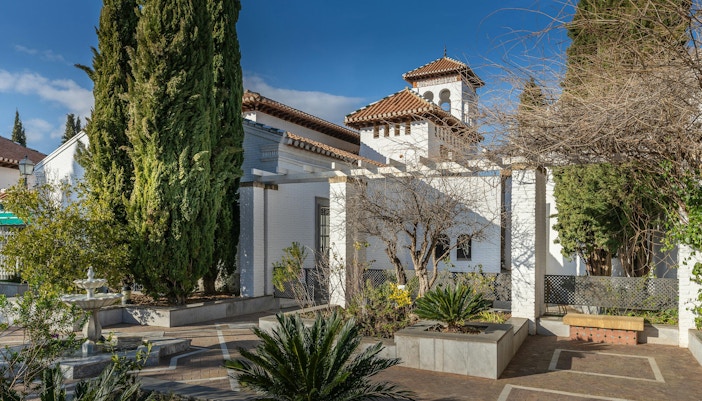
The church on or beside the former mosque site tells the post-1492 story in one glance. Stand outside and compare its Christian form with the surrounding Nasrid urban fabric. It marks political and religious replacement.

The Medina street plan
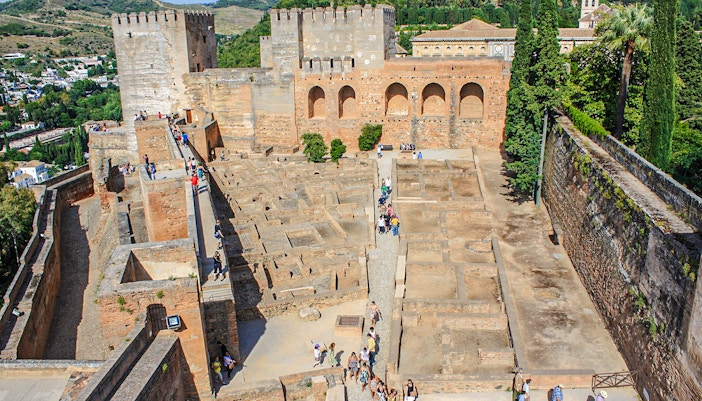
Notice how this part of the route feels more like a lived-in quarter than a ceremonial palace. Houses, services, and circulation once clustered here. That setting explains why a mosque belonged in this exact area.
Historical and cultural significance
Built in the early 14th century under the Nasrid rulers, the Alhambra’s mosque served the royal city that stretched beyond the palaces and gardens. After 1492, it lost that role and was eventually replaced by the Church of Santa María de la Alhambra, while the mosque bath and archaeological traces survived. Today, the site is read as a layered historical zone rather than an active mosque.
👉 Explore the full history of the Alhambra
Notable figures

Muhammad III | Nasrid sultan
Commissioned the royal mosque and helped shape the Alhambra’s Medina as a court city.

Yusuf I | Nasrid ruler
Expanded and refined the Alhambra’s urban and ceremonial spaces in the 14th century.

Isabella I of Castile | Christian monarch
After 1492, the mosque precinct entered a new Christian political and religious order.

Charles V | Holy Roman Emperor
His 16th-century palace made this same precinct visibly layered with Renaissance power.
Know before you go
- Daytime hours: Daily, 8:30am–8pm in summer and 8:30am–6pm in winter
- Ticket time: Enter the complex at your booked slot; if your ticket includes the Nasrid Palaces, that palace slot is separate and strict
- Night visits: Night routes focus on the Nasrid Palaces and do not replace a daytime visit to the mosque area
- Closed: January 1 and December 25
Address: Calle Real de la Alhambra, s/n, 18009 Granada, Spain
- Nearest bus: C30 or C32 from central Granada; allow about 15 minutes from Plaza Isabel la Católica
- Entry point: Enter through the Alhambra complex, then follow the monumental route toward Calle Real and the Medina
- Walk time inside: Allow roughly 10–15 minutes from the main access area, longer if you stop at the Palace of Charles V first
- Map tip: Ask for the Church of Santa María de la Alhambra or Bath of the Mosque area
- Wheelchair access: Partial; some open parts of the Alhambra are adapted, but historic paving and slopes can limit close access around the Medina
- Accessible routes: Ask staff at the entrance for the reduced-mobility route through the monumental area
- Surfaces: Expect stone paving, inclines, and some uneven ground near archaeological sections
- Facilities: Accessible restrooms are available within the wider Alhambra complex, not at the mosque site itself
- Families: Strollers can be awkward on stepped or uneven stretches; a baby carrier is often easier in restricted sections
- Photography: Personal photos are usually fine, but flash, tripods, drones, and professional filming equipment are prohibited or need authorization
- Protected remains: Do not step onto low walls, foundations, or cordoned-off archaeological areas
- Bags: Large luggage is not allowed; small backpacks may need to be worn on the front
- Food and drink: Not permitted inside protected monument areas
- ID checks: Carry the original passport or ID used for booking; Alhambra tickets are name-linked
Frequently asked questions about the Alhambra Mosque
Yes. The mosque site is included with every daytime Alhambra ticket. No separate ticket exists.
No. Any Alhambra ticket gets you there. A guided tour or audio guide simply makes the remains easier to understand.
No. It has no independent entrance and sits inside the Medina area of the Alhambra complex.
Usually midway through the open monument route. Allow around 10–15 minutes from the main access area, or longer if you stop elsewhere first.
Plan 10–15 minutes self-guided or 15–20 minutes with commentary. It’s short, but the site makes more sense if you pause.
Yes. Many Alhambra guided tours pass the mosque area, and guides explain layers you would otherwise walk past.
No. The original mosque is not active for prayer today. Visitors see an archaeological site and later Christian overlay, not a working mosque.
Yes. Standard Alhambra rules apply: no flash, no tripods, no drones, and no entering protected remains.
Partially. Accessible routes exist through much of the complex, but slopes, stone paving, and some uneven sections can limit close access.
The Bath of the Mosque and its surrounding Medina setting. Together, they make the vanished building easier to read.