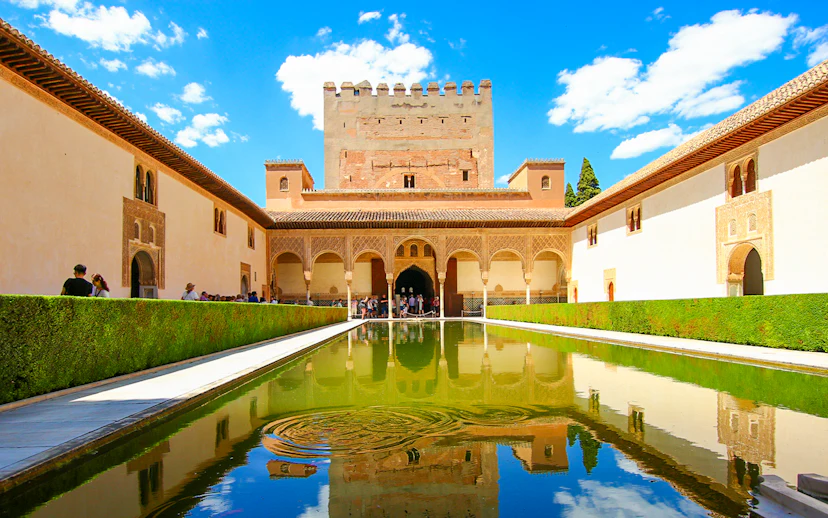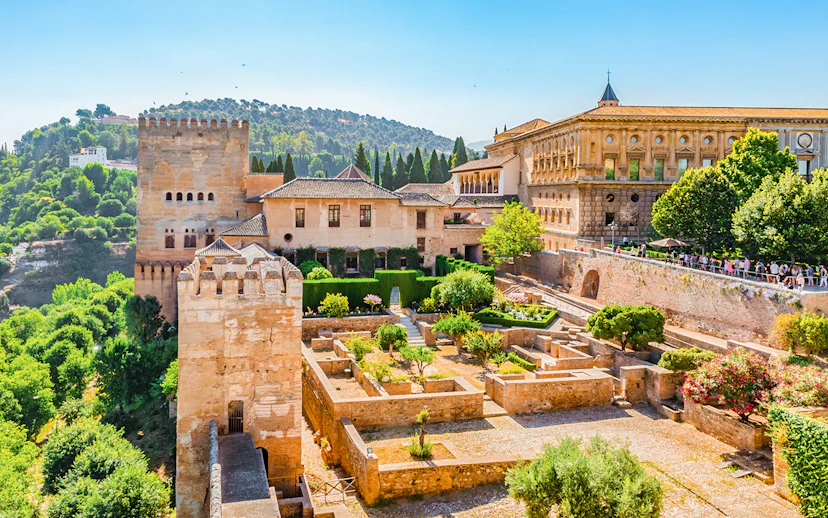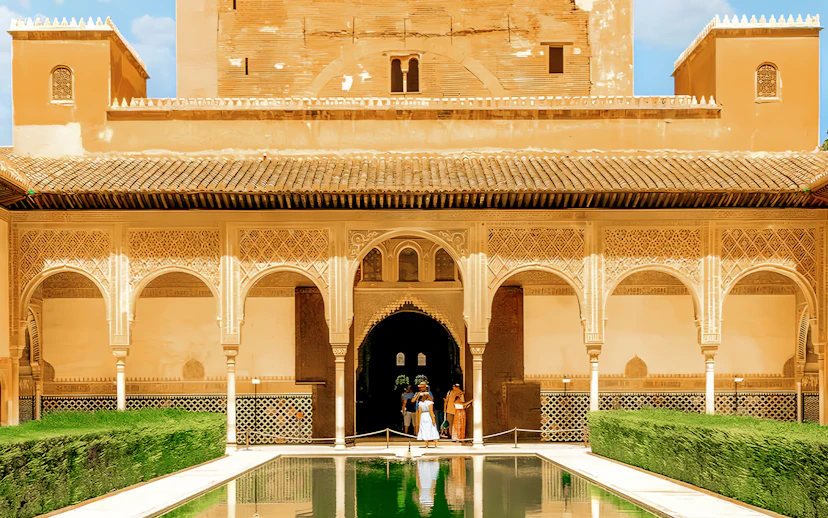
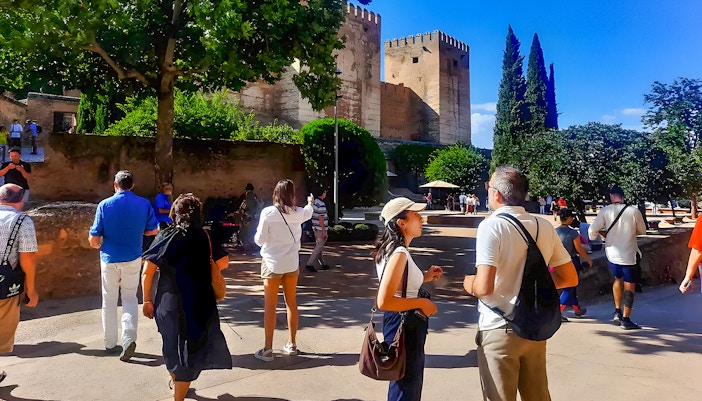
Aim for the first daytime entry or the last 90 minutes of the afternoon on a weekday. The towers stay cooler, shadows are softer, and photo stops move faster. Avoid the late-morning surge if wide views matter to you.
Quick overview
- Access: Included in all Alhambra entry tickets
- Separate ticket: Not required
- When you’ll see it: Usually early or midway, depending on your Nasrid Palace time slot
- Visit duration: 30–45 mins self-guided/45–60 mins with guide
- Best time: First daytime entry or late afternoon on a weekday for cooler stone, clearer views, and fewer bottlenecks on the towers
- Restrictions: Original ID required. Security screening, bag-size limits, and restrictions on drones, tripods, and professional filming equipment apply
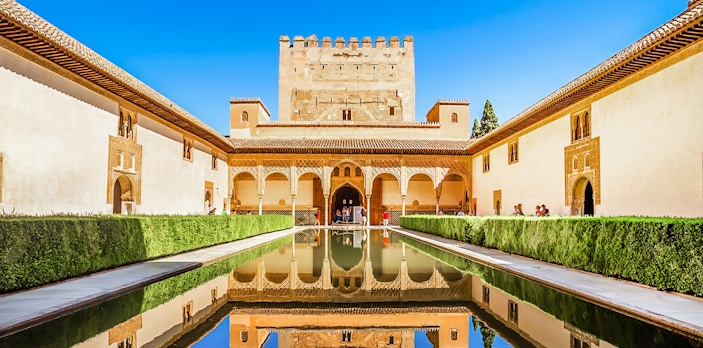
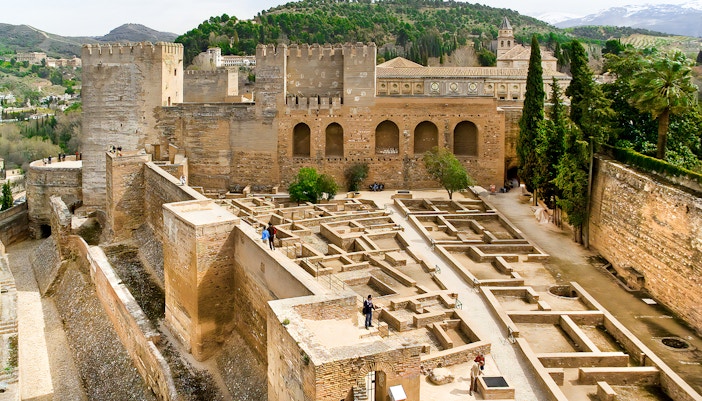
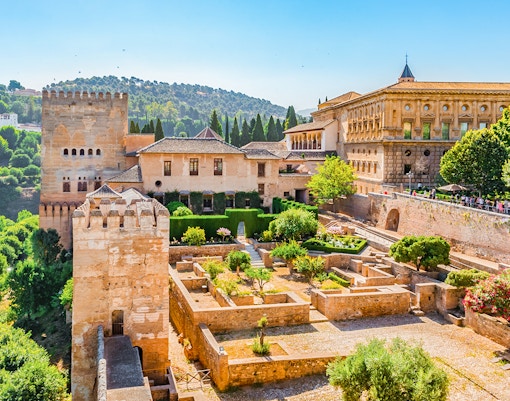
The Alhambra Fortress, known as the Alcazaba, is included with all Alhambra entry tickets. No separate ticket is needed. Inside the complex, it sits at the western end and can be visited before or after the other zones, but only after you enter through the main Alhambra entrance. Book a skip-the-line ticket or guided tour so you clear security faster and reach the towers before the late-morning bottlenecks build.
How to best experience the Alhambra Fortress
Best time to visit
How long to spend
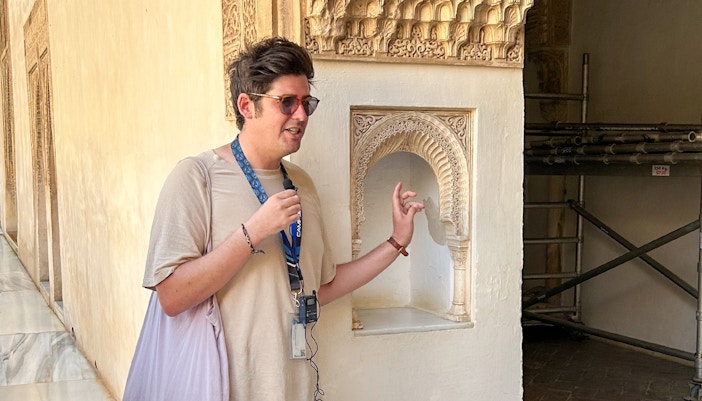
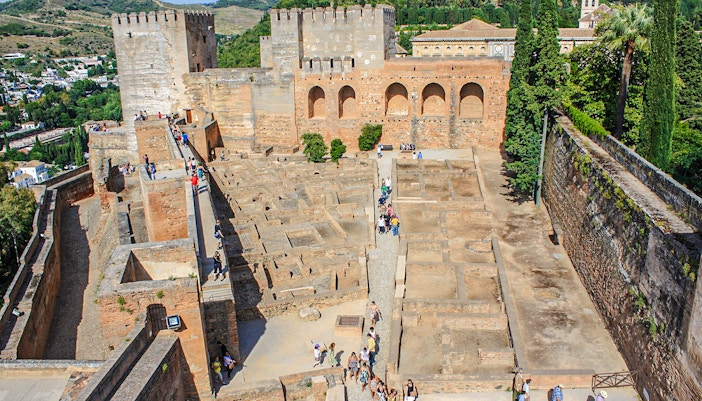
Plan 30–45 minutes if you’re moving independently, or 45–60 minutes with a guide who explains the towers, walls, and military layout. The value is in pausing at the viewpoints. If you rush through in 15 minutes, it feels like just another stone enclosure.
Where it fits in your itinerary
Because the fortress involves climbing, do it while your legs are still fresh, unless your Nasrid Palace entry time forces a different order. Budget another 2–3 hours for the wider complex. Don’t leave the ramparts for the end of a hot day.
Crowd patterns
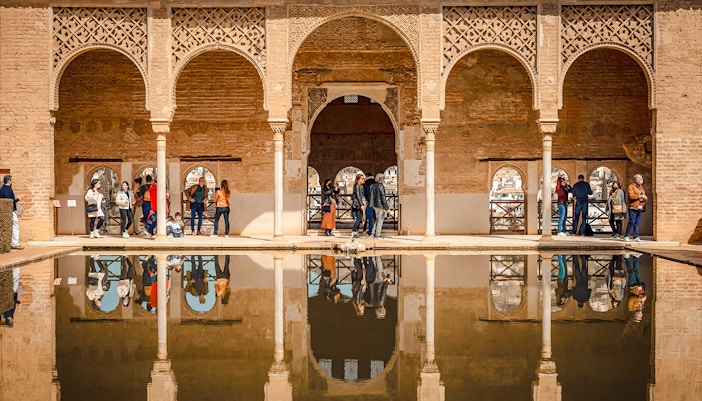
The bottlenecks are the tower staircases and lookout points, not the open courtyards. Traffic builds from about 11am to 2pm, especially on weekends and school-holiday dates. If you want uninterrupted city views, don’t save it for midday.
What to prioritize if time is short
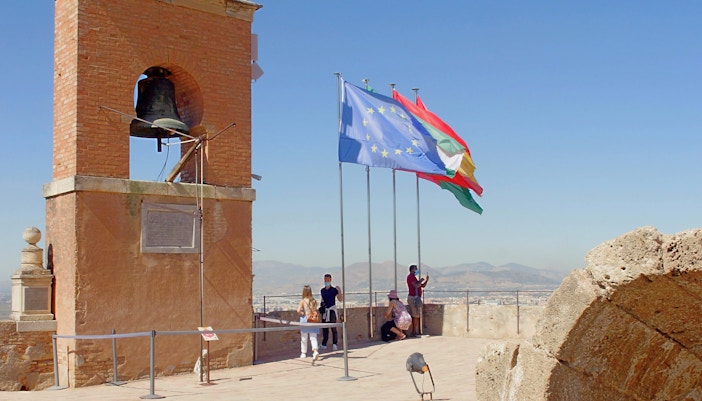
Head first to Torre de la Vela for the broadest Granada views, then walk the ramparts, then step into Torre del Homenaje if it’s open on your route. Skip lingering in transit courtyards before you’ve done the towers. The payoff here is elevation, not ornament.
Common mistakes to avoid
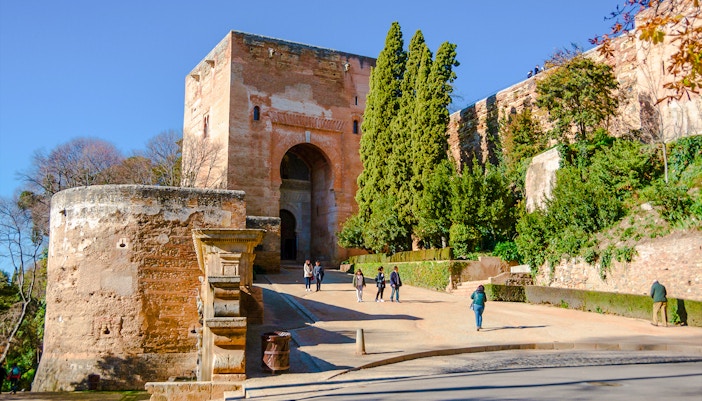
Most visitors underestimate the stairs, wear slick shoes, and stop only for the first panorama. Keep going along the walls for shifting angles over the Albaicín and Sierra Nevada. Also, carry your original ID; mismatched documents can stop your visit before it starts.
Best tickets to experience the Alhambra Fortress
| Ticket type | Why choose it |
|---|---|
Skip-the-line ticket with audio guide | Best if you want tower time at your own pace, plus route help and commentary in 5 languages. |
Guided tour without Nasrid Palaces | Strong choice if the fortress, Generalife, and military history matter more than palace interiors. |
Full guided tour with Nasrid Palaces | Best for a one-day overview, with the fortress explained in context of the wider Alhambra. |
Why it’s worth seeing
What makes this part of the complex irreplaceable is simple: these are the walls that made the rest of the Alhambra possible. Before the ornamental courts and carved palace rooms, there was a hilltop stronghold controlling Granada. Many visitors remember the Nasrid interiors most vividly, but the broadest views and clearest sense of how the whole citadel functioned are up here. Start with these 3 structural highlights.
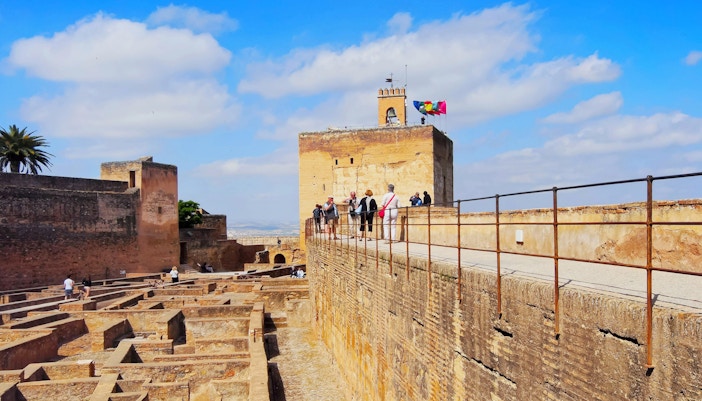
Torre de la Vela
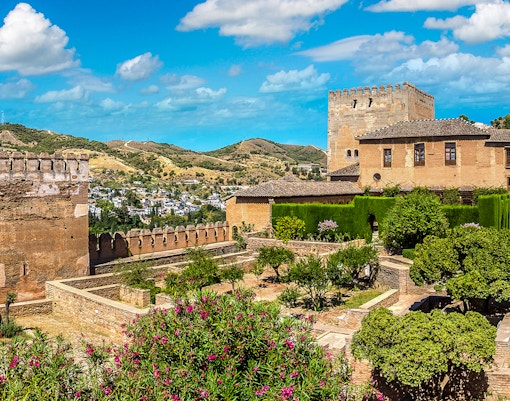
Built in the Nasrid period and later fitted with a Christian bell, this western tower is the fortress’s most rewarding lookout. From the top, you can read Granada in layers — the Albaicín, lower city, and distant Sierra Nevada — and understand why this hill was defensible long before it became ceremonial.
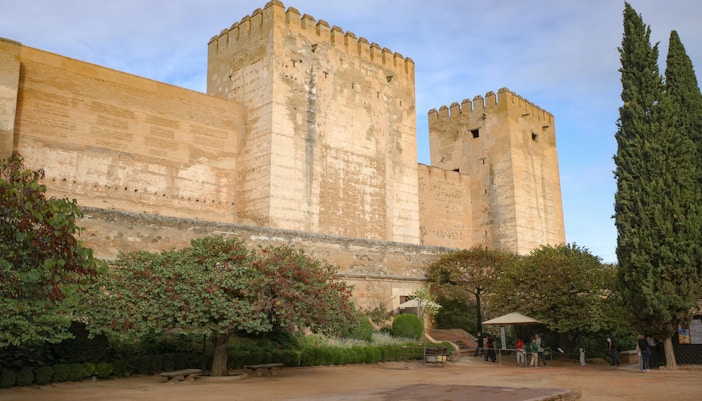
Torre del Homenaje
This was the citadel’s main keep, built with thick defensive masonry as the command point of the stronghold. Look at its mass rather than decoration: the point here is control, not display. Standing near it makes the palace sections of the Alhambra feel like a later expansion around an already secure core.
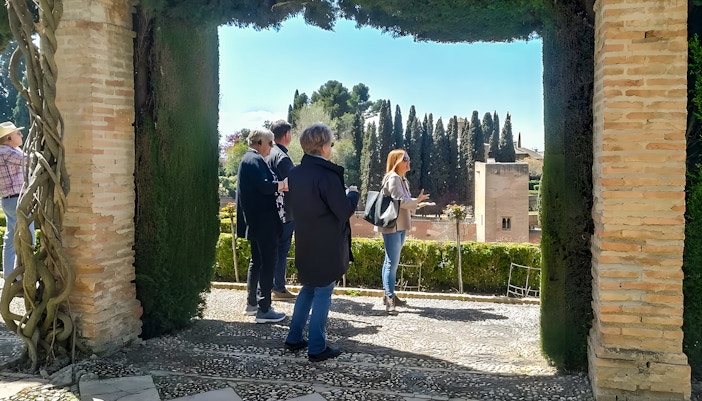
The ramparts and wall walks
These walls are the fortress’s most instructive feature because they show how movement, surveillance, and defense were organized across the hill. Walk them slowly instead of treating them as a path between towers. The changing angles over the city explain how the Alcazaba worked as a military platform, not just a viewpoint.
Historical and cultural significance
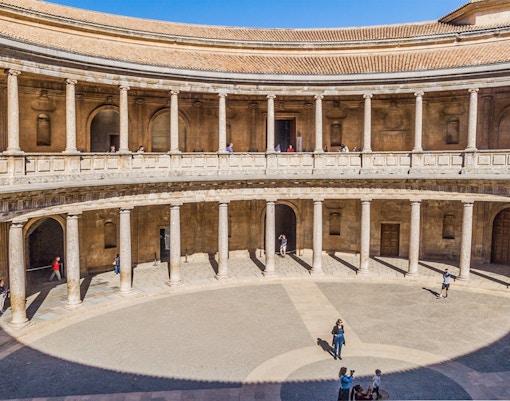
For most visitors, the surprise is that the fortress came first. Begun in the 13th century under Muhammad I, the Alcazaba was the military core that secured the hill before the famous Nasrid palaces expanded around it. Later, Christian rule kept the stronghold in use and reshaped the wider complex, including Charles V’s palace nearby. Today, it remains the Alhambra’s clearest defensive zone and broadest public lookout over Granada.
Notable figures
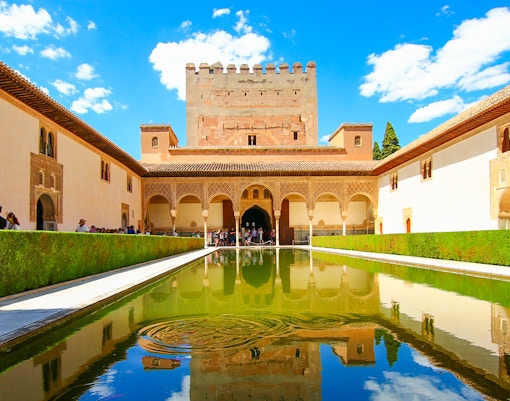
Muhammad I ibn al-Ahmar | Founder
Started the hilltop citadel in 1238 and established Nasrid Granada.
View Wikipedia
Yusuf I | Nasrid ruler
Oversaw major Alhambra expansion and strengthened both royal and defensive spaces.
View Wikipedia
Muhammad V | Nasrid ruler
Advanced the Alhambra’s most refined palace program around the earlier fortified core.
View Wikipedia
Charles V | Holy Roman Emperor
Inserted a Renaissance palace into the complex, changing how later visitors read the site.
View Wikipedia
Know before you go
- Open: Daytime visits usually run 8:30am–8pm from April 1 to October 14, and 8:30am–6pm from October 15 to March 31
- Last entry: Follow the exact time printed on your Alhambra ticket; late arrivals lose access
- Closed: The monument is generally closed on January 1 and December 25
- Night visits: Separate night-visit schedules apply and don’t replace standard daytime access
Address: Calle Real de la Alhambra, s/n, 18009 Granada, Spain
- Nearest bus: C30 and C32 from the central Granada stop near the main access area; from Plaza Nueva, allow about 15 minutes
- Walking route: From central Granada, it’s an uphill walk of about 20–30 minutes
- Entry point: Enter through the Alhambra Access Pavilion; there is no separate fortress entrance
- Position in route: From the main entrance, most visitors reach the fortress in about 10–20 minutes, depending on pace and ticket timing
- Wheelchair access: Partial across the Alhambra complex, but not all fortress sections are accessible
- Upper towers: The lookout towers and wall walks involve steep steps and are not wheelchair accessible
- Surface: Expect uneven stone, sloped paths, and worn stair edges throughout the citadel
- Accessible route: Some accessible routes and restrooms exist elsewhere in the Alhambra complex, but the military core has stricter limits
- Service animals: Certified guide dogs are permitted
- ID checks: Carry your original passport or official ID card; digital copies and photocopies may be refused
- Bag policy: Bags larger than 40 × 40cm are not allowed, and small backpacks may need to be carried at the front
- Food and drink: Food, drinks, and alcohol are not permitted inside the monument
- Photography equipment: Drones, tripods, selfie sticks, and professional filming gear are restricted or require authorization
- Security: Skip-the-line tickets do not bypass security screening, and all visitors are checked before entry
- Stairs: Reaching the towers involves steep staircases and short but constant climbs
- Walking time: Most visitors stand and walk for 30–60 minutes inside the fortress zone alone
- Difficulty: Moderate; manageable for many visitors, but tiring in the heat or after a long, full-complex visit
- Surface conditions: Stone paving can be uneven and slippery when worn smooth
- Alternative: If climbing is difficult, focus on lower open areas and skip the upper towers
Frequently asked questions about the Alhambra Fortress
Yes. Entry to the fortress is included with valid Alhambra entry tickets. No separate fortress ticket exists.
No. Any Alhambra ticket with monument entry covers it. Choose guided or audio-guided options if you want more context, or a full-access ticket if you also want the Nasrid Palaces.
No. The fortress has no independent entrance. You must enter the Alhambra complex first and walk to it from the main entrance.
Usually early or midway, depending on your Nasrid Palace time. From the main entrance, most visitors reach it in about 10–20 minutes.
Plan 30–45 minutes on your own, or 45–60 minutes with a guide. The towers and ramparts reward stopping; don’t treat it as a quick pass-through.
Yes. Both full Alhambra tours and guided visits without Nasrid Palaces include the fortress. A guide helps you read the walls, towers, and military layout.
Yes. Some options include the fortress, Generalife, and Charles V Palace without the Nasrid Palace entry. You still see the Alhambra’s defensive core and best open-air viewpoints.
Partly. The open areas are manageable for many visitors, but towers and wall walks involve steep steps, uneven stone, and long standing.
Yes. Original ID is mandatory, all bags are screened, and large bags, food, drones, tripods, and professional filming gear are restricted.
Yes, for personal use in most outdoor areas. Flash, tripods, drones, and professional equipment are restricted or require authorization.